Reinforcing commitment to quality, safety and 100% recyclable packaging

Macpac has achieved BRCGS AA+ accreditation for packaging materials following an unannounced audit — further strengthening its reputation for quality, safety and reliability.

The AA+ grade is the highest level awarded under the BRCGS Packaging Materials Global Standard and provides customers with added assurance that Macpac’s manufacturing processes meet rigorous requirements for safety, quality and operational excellence.

Designed to help packaging manufacturers demonstrate product integrity, legal compliance and consistent quality, the standard is recognised across the supply chain and supports customers looking for dependable, high-performance packaging partners.

Graham Kershaw, Managing Director at Macpac, comments: “Achieving AA+ accreditation via an unannounced audit, with no non-conformances raised, is a strong endorsement of the standards our team delivers every day. It reflects our attention to detail, commitment to continuous improvement, and focus on producing recyclable packs that combine environmental responsibility with excellent functionality and product protection.

“For our UK and global customers, this achievement offers further confidence that every thermoformed packaging solution leaving our Stockport manufacturing facility is produced to the highest standards of quality, safety and performance,” Graham concludes.

Macpac are BRCGS accredited packaging manufacturers

Thermoformed packaging manufacturer reinforces commitment to medical device industry with internationally recognised quality management standard

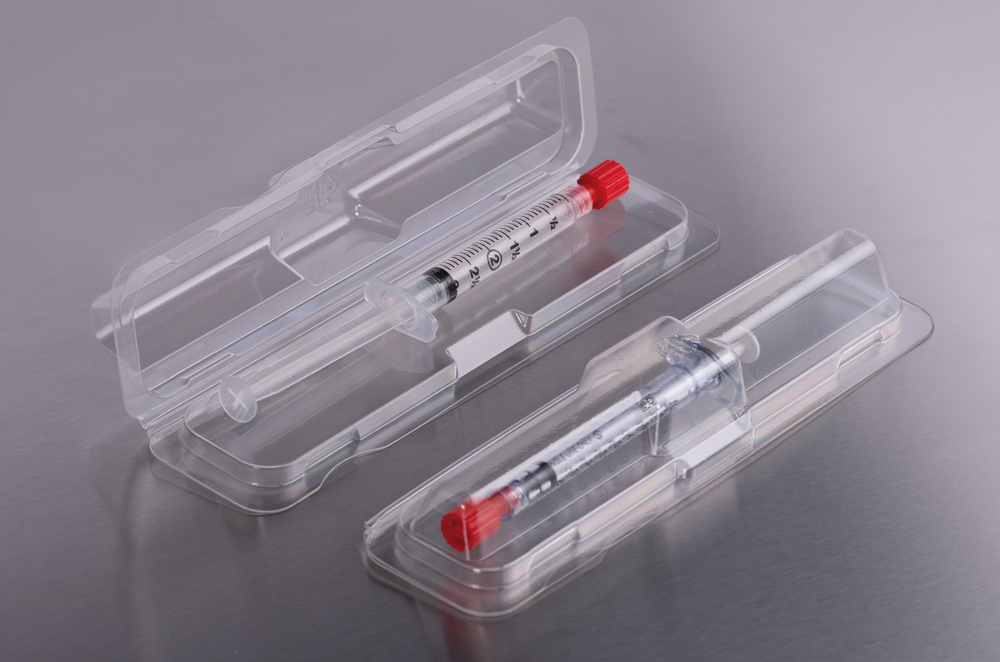
Macpac has further strengthened its position as one of the UK’s most trusted suppliers of plastic thermoformed packaging by achieving ISO 13485:2016 accreditation at the first attempt. The internationally recognised quality management standard confirms that the Stockport-based manufacturer’s systems meet the stringent requirements needed to support customers within the medical device sector.

The significant achievement follows the successful completion of both Stage 1 and Stage 2 assessments, during which Macpac passed a rigorous audit process designed to measure the effectiveness of its quality management systems, controls and compliance procedures for the medical device industry.

The ISO 13485:2016 accreditation places particular emphasis on risk management, document control, traceability and continuous improvement — all key areas in supporting safe, reliable and compliant supply chains for medical device packaging.

Alison Griffies, QA Manager at Macpac, said: “We are delighted to have achieved ISO 13485:2016 accreditation at the first attempt. This certification gives customers additional confidence that choosing Macpac as their preferred supplier for thermoformed plastic packaging means our processes and controls are aligned with the strict regulatory requirements of the medical device industry.”

Macpac manufactures high-quality, 100% recyclable thermoformed packaging designed to help businesses bring their products to market efficiently and responsibly.

As a third-generation family business with more than 50 years’ experience, Macpac has built a reputation for innovation, reliability and customer-focused service. The new accreditation builds on the company’s wider commitment to quality across its operations.

Macpac supplies a wide range of sectors, including medical, pharmaceutical, food, manufacturing and retail, with particular focus on technically demanding packaging projects.

From initial pack design through to full-scale production, all activity takes place under one roof at Macpac’s state-of-the-art manufacturing facility.

Alongside its continued support for customers across the UK, Macpac has also achieved strong international growth, tripling its export business over the past five years. Following the addition of Australia in 2023, the company now supplies packaging to 22 countries worldwide, supporting brands with consistent packaging solutions across multiple markets.

Macpac has ISO13485-2016 accreditation for pharmaceutical packaging

Combining the performance of traditional plastics material with the natural high end look and feel of paper.

As one of the UK’s leading independently owned manufacturers of thermoformed plastics packaging products, we are excited to offer Sulapac® Flow 1.7, a safe, sustainable and high performance thermoformable wood-polymer composite material.

Developed by Helsinki-based Sulapac Ltd, the award-winning, food-safe (EU & FDA US) material is produced from biodegradeable biopolymers and wood dust, and can be shaped as easily as traditional plastics – making it ideal for bespoke luxury packaging solutions.

Sulapac’s innovative wood-polymer blend offers a range of significant practical advantages to paper and card alternatives. It maintains its shape, can be clicked in-out, does not collapse in water and can be thermoformed exactly to suit individual product requirements.

Offering the eco benefits and low carbon footprint¹ of fibre products, the wood dust used to produce Sulapac Flow is a by-product sourced from the North European sawmill industry eliminating the need to cut down trees.

Crucially, it is biobased, industrially compostable, recyclable by design, and with no permanent microplastics², PFAS or other toxic chemicals³.

Sulapac Flow is used in different types of packaging inserts, typically replacing PS, PP or PET. Like conventional plastics, Sulapac Flow has a ‘memory’: the product can be clicked in and out repeatedly, without the packaging losing its shape.

It allows for detailed surface structures with high precision and is available in custom colours, while the aesthetically pleasing natural look and feel removes the need for post processing.

Sulapac Flow is an excellent material choice for point-of-sale displays, logistics trays and single use food packaging.

Unlike many other biobased materials that demand precise temperature control during manufacturing, Sulapac Flow’s natural insulating properties provide broader temperature ranges within which it remains workable.

Compared to conventional plastic, Sulapac Flow requires lower temperatures for thermoforming leading up to 20% energy savings through shorter heating time. Faster heating also translates into reduced production time and increased process efficiency, which is also supported by the consistent quality of the material.

Graham Kershaw, Macpac’s Managing Director comments: “Adding Sulapac Flow to our range of packaging materials reflects Macpac’s on-going commitment to helping clients meet their environmental targets and provide the required functionality and protection for their products.

“As a forward-thinking thermoformed packaging manufacturer, it is important that we review and expand our material offering in response to the changing needs of our global client base and to meet our own ambitious long-term growth strategy and sustainability goals.”

Clear, comparable data in easy to interpret format facilitates confident packaging design decisions.

Macpac has collaborated with Valpak to develop a bespoke in-house carbon calculator tool, a key strategic move that further underlines its commitment to manufacturing thermoformed packaging solutions that meet the sustainability goals of its fast-growing global client base.

Specially developed to provide clear, comparable LCA data, Macpac’s new carbon assessment solution enables clients to make confident and environmentally responsible decisions about packaging design whilst adhering to increasingly stringent regulation and meeting their science-based targets (SBTs).

Because the tool compares the carbon footprints of many different types of packaging, including plastic, bio-plastics, paper and card, clients are able to assess if they are using the right material for their design. It can show the potential savings when using high recycled content, downgauging, changing material or reducing pack size for example.
Crucially, the carbon assessment can be implemented at concept stage data providing ample time to explore other options and make adjustments if necessary. However, calculations can also be completed for packs already in development and even existing product lines.

Macpac’s carbon calculator provides clear, visual outputs tailored for each individual client. Easy to print, read and interpret, the carbon datasheet format is ideal for internal use and sustainability reporting.

In line with its own sustainability strategy, Macpac uses rPET material in its thermoformed packaging products. It contains at least 30% post-consumer recycled material and is 100% recyclable.
Moreover, the recycled content of rPET can be increased by up to 100% if necessary. By incorporating more recycled content, Macpac can manufacture packs with lower carbon footprints than some paper or card alternatives.

Background

Since it was established in 2019, Sweetzy has gained a reputation for high quality pick n mix confectionery products, with its festive ranges proving particularly popular.
When Sweetzy needed a new pack for its innovative 2025 Advent Calendar product, it approached Stockport-based Macpac – one of the UK’s leading independently owned and run thermoformed packaging manufacturers.
The new design would replace a previous advent calendar large flattened square pack which comprised cardboard inserts in a winebox style for the individual sweet cavities.

The brief

Sweetzy asked Macpac to design a lightweight thermoformed tray for a mail order advent calendar offering that would hold 24 x 50g bags of sweets and a large 200g bag for opening on Christmas Day.
The new design needed to be easy to assemble and pack whilst ensuring the individual bags of sweets were held securely in their respective cavities, eliminating the risk of them migrating during transit or when on display in the home.

The challenge

The key design challenge for Macpac was to create deep individual cavities with dividers that would prevent the packs of sweets moving around.
With thermoforming constraints and the shape of the cavities, it would have been difficult to form the trays with full height dividers and retain strength in the base of the cavities. If the base of the cavities were too thin, then the tray might collapse and sweets would migrate.

The solution

Macpac’s in-house design team developed the advent calendar tray with dividers that reduce in height across the width of the cavity which helped with the forming process.
Macpac created a half size prototype to test the concept and ensure sweets stayed in place before producing a full size prototype which was extensively tested by Sweetzy before progressing to the tooling stage.
The advent calendar tray is produced from low density Eco-Form material which is a lower cost alternative to conventional APET/RPET. Produced from 90% recycled material, Eco-Form offers excellent processing characteristics and utilizes post industrial APET/PE recyclate to reduce a major source of landfill waste.

The results
The finished design delivered on all aspects. “We were so excited to introduce the eye-catching new pack for our popular advent calendar product,” said Sweetzy founder and Director, William Godfrey.
“It is more than just a design change though. It has helped us improve packing and filling efficiencies and further underlines our commitment to more sustainable packaging solutions that make a positive impact, as well as delivering the same high quality sweet products that our customers know and love.
“Not only has it elevated the look of the finished advent calendar product, but it has also delivered on functionality. Despite being put through its paces during transit, all 25 packs of sweets stay firmly in place – even when the advent calendar is standing up – so consumers are promised a confectionery treat every time they open a door.
“We feel the new pack design really does offer a point of difference for advent style confectionery offerings,” he added.
“The feedback has been very positive, with customers stating that the sweets stayed in place, unlike previous years, where packs fell to the bottom of the calendar, which was disappointing for lots of children.”

Sweetzy product

Next generation Illig thermoformer set to elevate operations and significantly increase production capacity for further global expansion

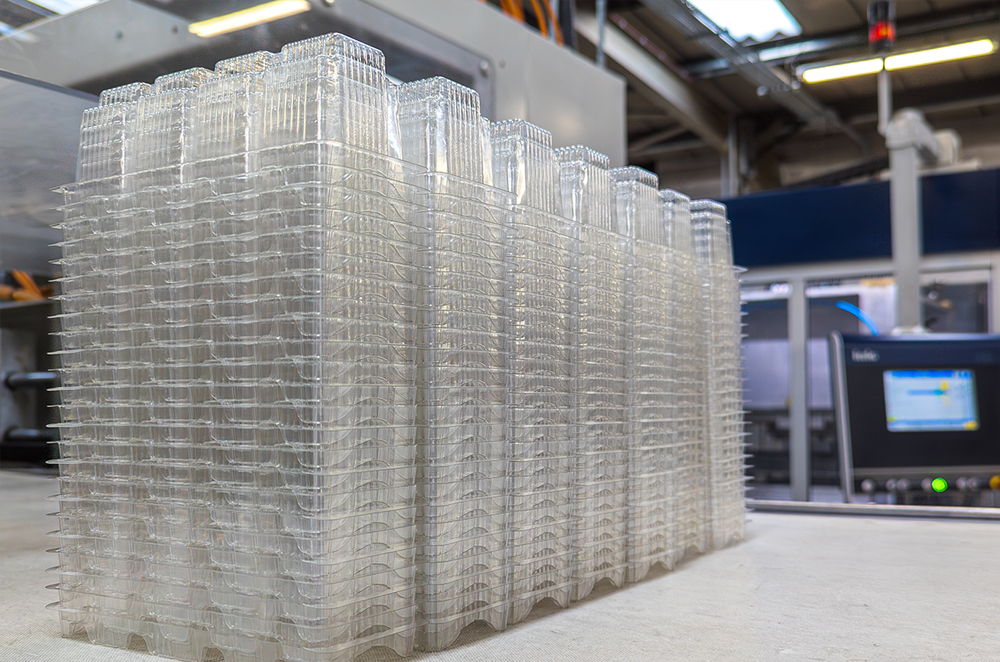
In a key strategic move designed to accommodate increased volume and support future global growth plans, Macpac (https://www.macpac.co.uk/) – one of the UK’s leading thermoformed packaging manufacturers – has further elevated its operations with the installation of another Illig RDKP 72 automatic pressure thermoforming system at its state-of-the-art plant in Stockport.

Representing a £700,000 investment, the new Illig six-bar machine is Macpac’s twelfth thermoformer. Designed to strengthen its position in the worldwide plastic packaging, it is set to increase capacity and offer more scope in terms of run speed while delivering superior packaging quality, fast error free changeovers and ease of operation.

Graham Kershaw, Macpac’s Managing Director comments: “The installation of the new thermoforming machine underlines our commitment to developing and offering customers a wide range of innovative 100% recyclable packaging solutions. It enables us to continuing providing the flexibility to meet orders of all sizes that fit budget constraints yet meet environment goals.

“Crucially, it will allow us to build on our growing worldwide customer base – especially in the food and pharmaceutical markets. On-going investment in best of breed equipment helps ensure we stay ahead of the competition and is a fundamental part of our ambitious business strategy,” he concludes.

Macpac take delivery of new Illig thermoforming machine